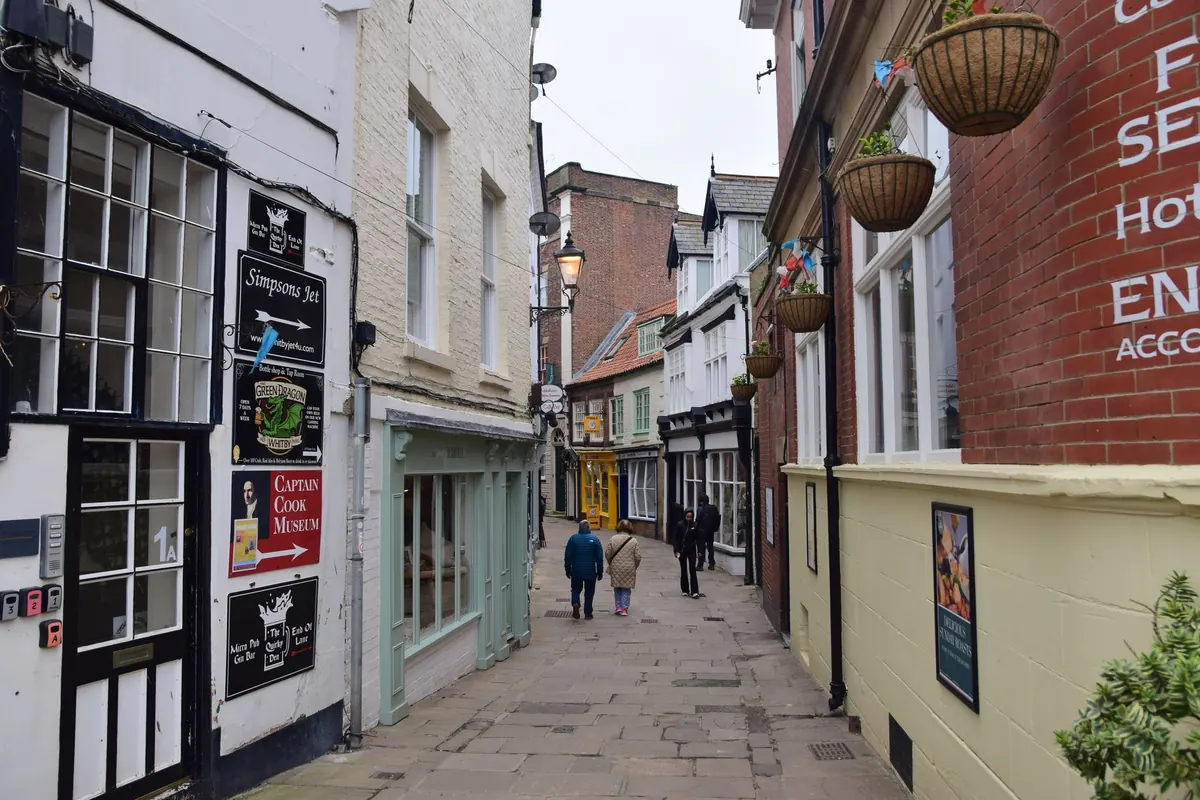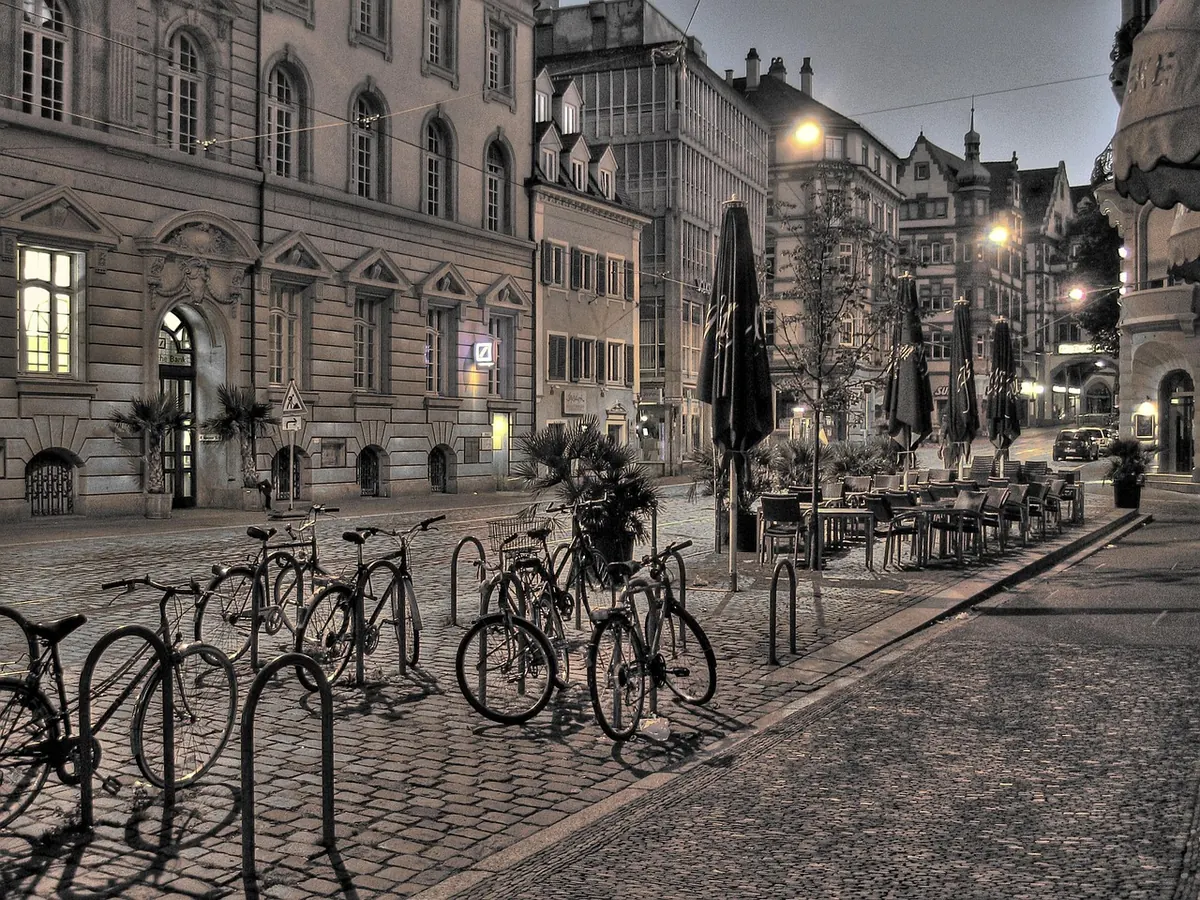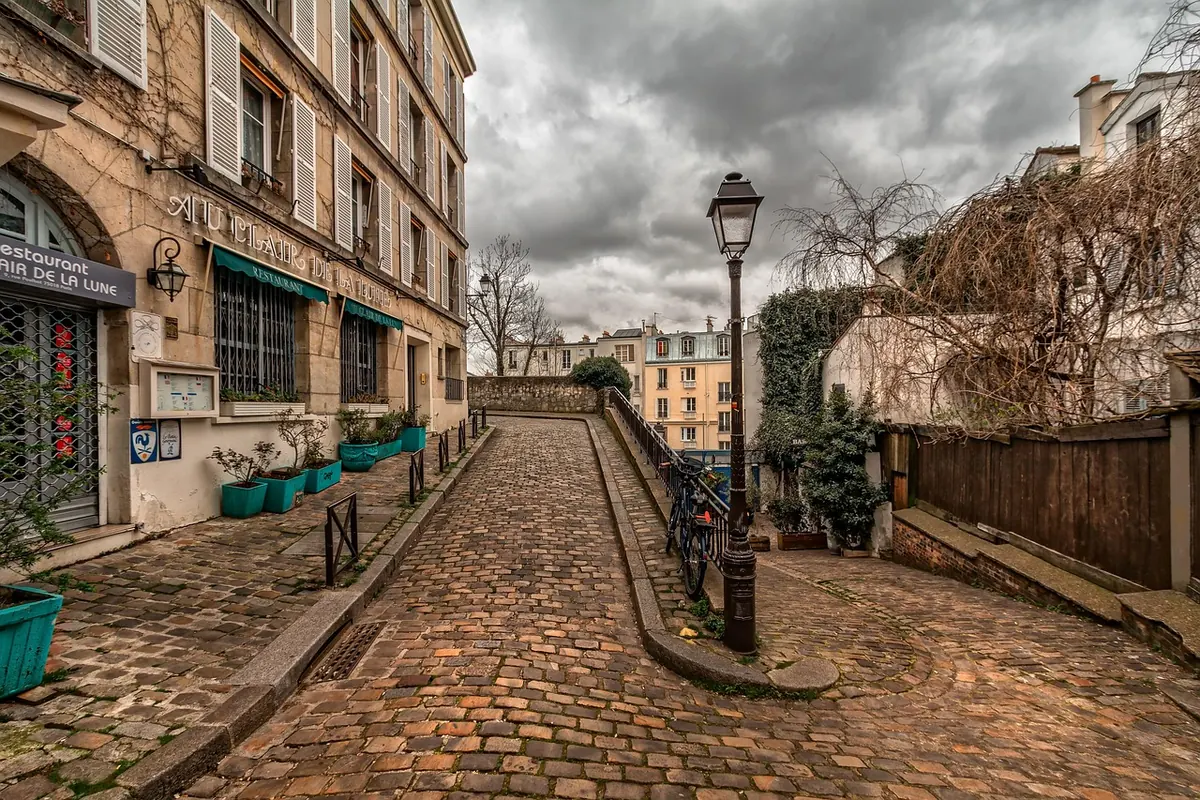
Stand on a cobbled lane at half past eleven at night and you can hear a taxi three streets away. Doors, radio, conversation, the trundle of a suitcase along the pavement — all of it arrives before the car does. Send the same taxi down modern asphalt and it slips past almost unnoticed.
The stone doesn't create that racket from nothing. It simply refuses to swallow it, then adds a percussion section of its own.
Not Every Cobble Is a Cobble
Strictly, a cobble is a rounded, water-worn stone — the sort picked off a riverbed or a beach. Laid in sand or mortar, each one sits at its own height and angle, which is why walking on true cobbles feels like balancing on a bag of oranges.
Most streets visitors photograph are setts: quarried blocks of granite, limestone or whinstone, cut roughly square and laid in courses. Setts sit flat and butt tight against one another. That distinction matters for noise, because a rounded stone is poised to rock under a tyre, while a well-laid sett surface behaves much more like a continuous slab — until the joints begin to fail.
Why Hard Stone Is Such an Efficient Reflector
Sound spreads out, meets a boundary, and is either absorbed, transmitted or reflected. Stone is dense, stiff and non-porous, so almost nothing passes through it and very little is soaked up. Most of the energy comes straight back into the street.
Asphalt isn't a sponge either, but it is softer, slightly porous, and bound with bitumen that damps vibration. It deforms under a tyre, stretching each contact over a longer moment. Stone barely deforms, so the contact is abrupt — and abrupt impacts carry more high-frequency energy. Human hearing is sharpest exactly where clatter and crackle sit, which is why a stone street can measure no louder than tarmac and still sound far louder.
What isn't radiated as sound travels as vibration: through the tyre, the suspension and the body of the vehicle. That's the boom inside a bus, the rattle of a van's doors, the buzz of loose trim. Ground-borne vibration reaches cellar walls and the glass in upper windows too.
Every Joint Is a Tiny Collision
A smooth road gives a tyre one long, gentle contact patch. A sett surface gives it hundreds of small ones, because every gap and every proud or sunken stone is a step the wheel has to climb or drop.
At walking pace you hear the individual taps: heel, toe, heel, toe. Pushchairs, delivery trolleys and wheeled suitcases play the same rhythm. So does a bicycle, and the rider feels it in the wrists. As speed rises the taps crowd together until they merge into a hum and then a roar. On any road, tyre noise tends to overtake engine noise at higher speeds; stone simply makes that handover far more dramatic. Hard, narrow tyres and firm suspension are the worst offenders.
Why Narrow Streets and Still Nights Make It Worse
Old towns grew narrow. A cobbled lane usually has two or three storeys of brick or stone standing close to the kerb, so sound leaving the road hits a wall, comes back, and hits the opposite wall. Each reflection is weaker than the last, but the sum is longer, louder and harder to place than the same traffic in an open square.
Soft surfaces mop some of this up, and stone streets tend to have few: no grass, little leaf litter, only occasional trees. Night adds its own effect. Traffic thins, so the background drops away and every vehicle stands out — and cool air near the ground, sitting under warmer air above, bends sound downwards and helps it carry. That's why one car on a winter night is audible long before it turns the corner.
A Brief History of Noisy Paving
Cobbles and setts were laid for grip and drainage, for hooves, iron-rimmed cart wheels and boots. They were never meant for rubber tyres at 30 mph. With horses the noise was worse still: thousands of iron shoes striking stone, cart wheels grinding, all of it bouncing off the same buildings. Victorian cities experimented with wood-block paving, which was quieter and kinder on hooves, and straw was spread outside the windows of the sick.
Pneumatic tyres did more for street noise than any paving reform. Through the twentieth century, many towns simply covered their setts in asphalt — cheap, flat, quiet — and the stone vanished under a lid. What survives tends to be the streets protected for their looks. The prettiest streets are often the loudest.
What Actually Reduces the Noise
- Slow the traffic. Impact energy rises steeply with speed, and calmed streets usually carry fewer vehicles as well as slower ones.
- Keep heavy vehicles out. Weight limits and delivery windows do more than any surface treatment; a loaded lorry on setts is a different event from a small car.
- Fix the surface. Loose, rocking setts are the loudest ones. Relaying them tight, re-pointing joints and replacing sunken stones cuts the clatter noticeably. Some authorities bed setts on rubber or resin and use resin-bound joints to damp the impact.
- Soften the edges. Planters, trees and permeable paving break up reflections, even if only modestly.
- Treat the buildings. Secondary glazing, acoustic seals and heavy curtains help indoors. Sealing draughty gaps matters more than changing the glass.
- Report faults. One rocking sett outside a bedroom window can ruin a night's sleep, and it is usually a straightforward repair for a highways team.
Living With the Clatter
If you live on a stone street, the useful steps are the dull ones. Photograph loose setts and broken joints and report them with an exact location. Ask your council's highways team about speed limits and lorry routing. Deal with the windows before spending money on anything else. If the noise is disturbing your sleep, your council has a duty to look into certain noise complaints, and it is worth speaking to your GP if poor sleep continues; formal nuisance cases and acoustic surveys are areas where professional advice earns its keep.
If you're only passing through, footwear is the simplest fix. Rubber soles walk quietly on setts; leather and hard plastic drum. Roll a suitcase rather than dragging it, and lift it over the worst patches. Cyclists should let a little air out of the tyres and keep both hands on the bars. Stone is a beautiful, stubborn, awkward surface — and once you know why it shouts, it is far easier to live alongside.
Photo: Vitali Adutskevich / Pexels